
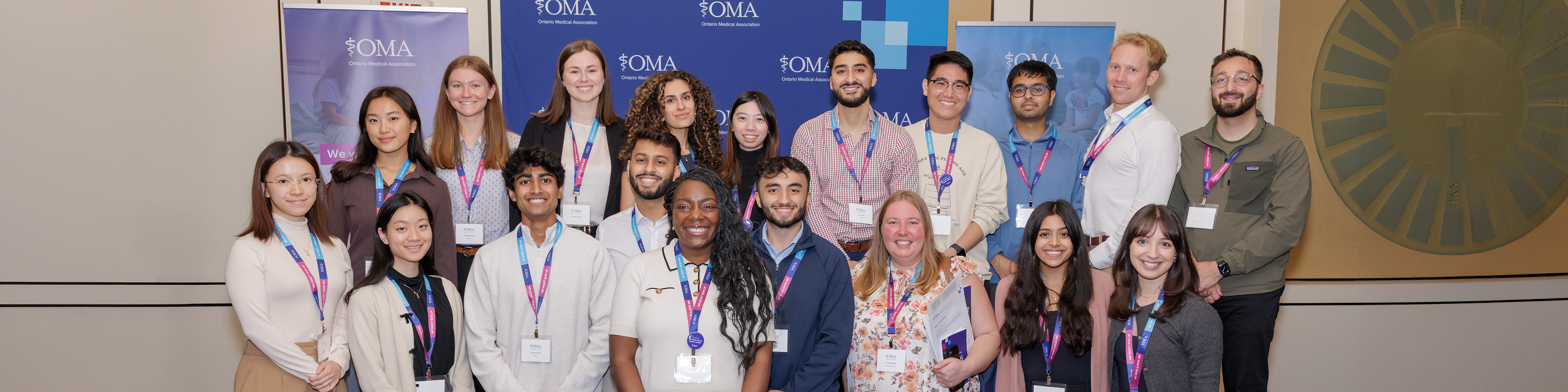
 OMA President Dr. Zainab Abdurrahman, centre, poses with medical students from across Ontario at the OMA’s Queen’s Park Day training event on Oct. 19, 2025
Thirty-six per cent of respondents are either unlikely or very unlikely to pursue the specialty
Ontario’s medical students continue to be cautious of pursuing “cradle to grave” family medicine, with remuneration and administrative burden remaining the greatest disincentives.
In a survey this spring, just over 40 per cent of respondents said they were likely or very likely to pursue family medicine. Remaining respondents felt neutral (22 per cent) toward the discipline or were unlikely (21 per cent) or very unlikely (15 per cent) to pursue it.
The survey was completed by the Ontario Medical Students Association and the OMA via Alida Research Platform. It asked 470 individuals – representing about 12 per cent of all Ontario medical students – about their perspectives on family medicine as a potential specialty.
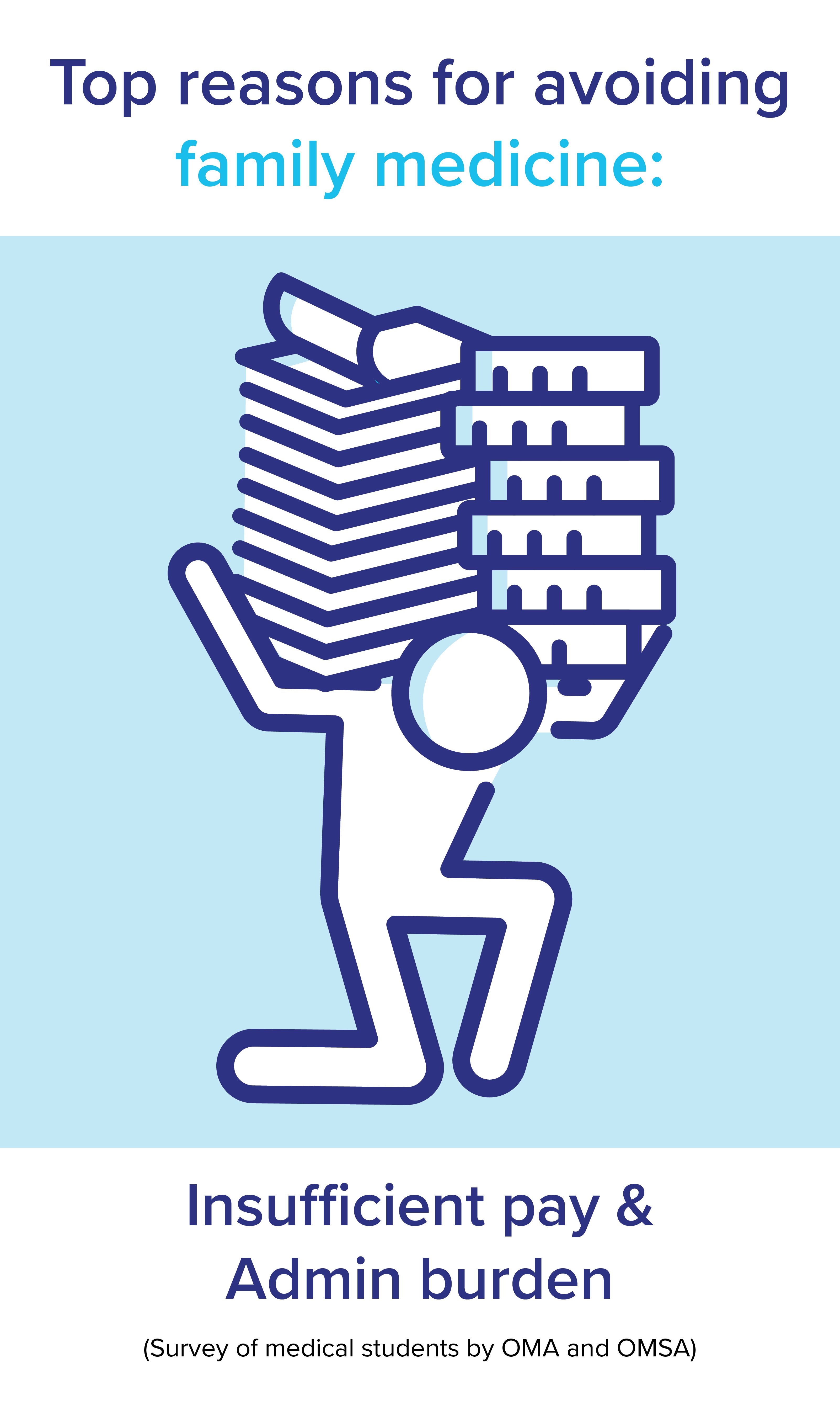
When asked to rank their top reasons for not choosing family practice, 39 per cent listed insufficient pay as a top reason, with 31 per cent selecting administrative burden.
Lack of interest, resources and support and respect and recognition were also deterrents.
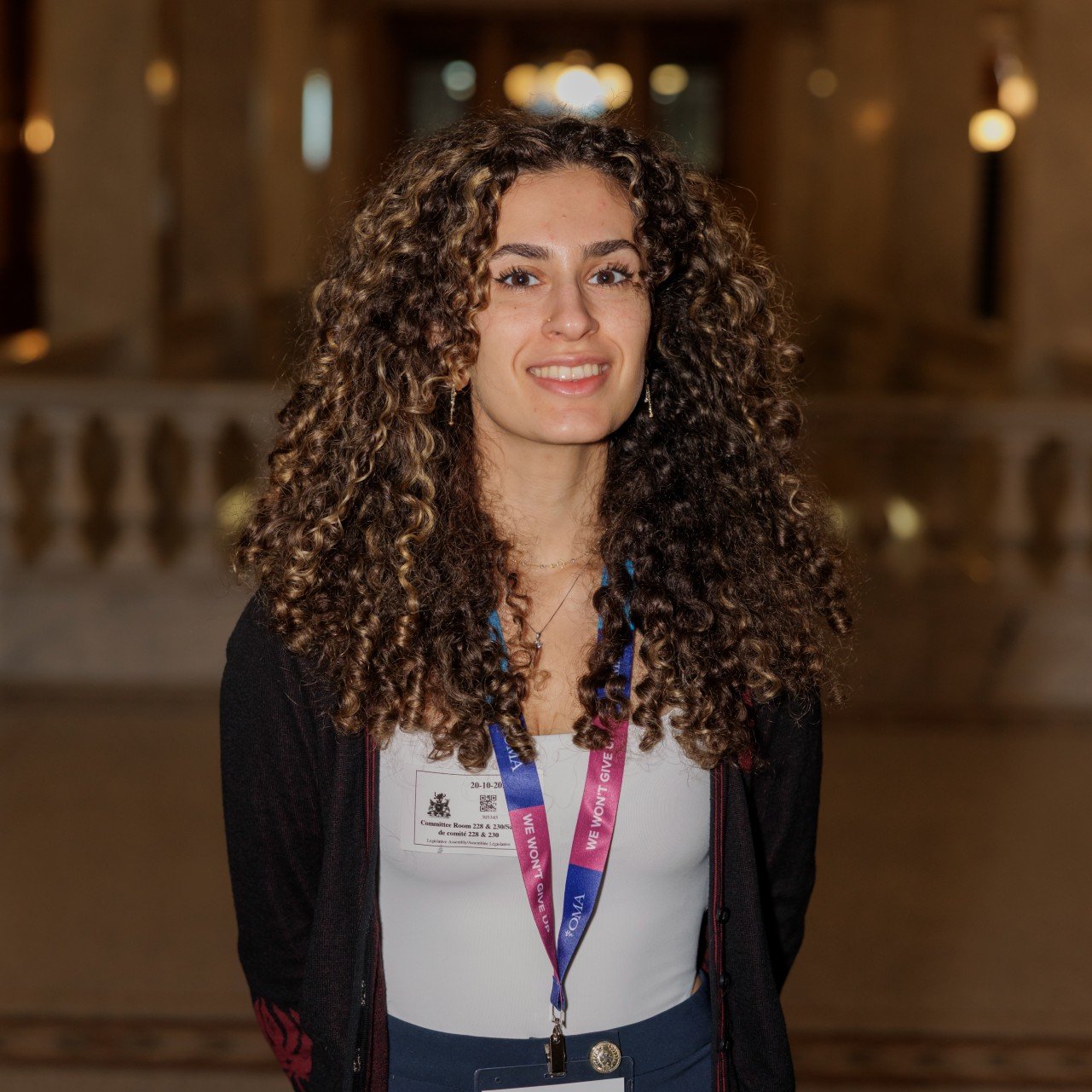
Samin Barakati, a second-year student at Western University’s Schulich School of Medicine & Dentistry, plans to pursue family medicine but feels many are hesitant because of remuneration that’s lagging other specialties and the burden of indirect care.
“Even in my class of 200, I see very few people showing interest in family medicine as their first choice of specialty,” she says. “The compensation isn’t there. A lot of your time is spent doing indirect care, paperwork. These are things that I feel lead to burnout in the profession, and it’s something that demotivates a lot of students from pursuing (family medicine).”
Samin Barakati is a second-year medical student at Western University’s Schulich School of Medicine & Dentistry.
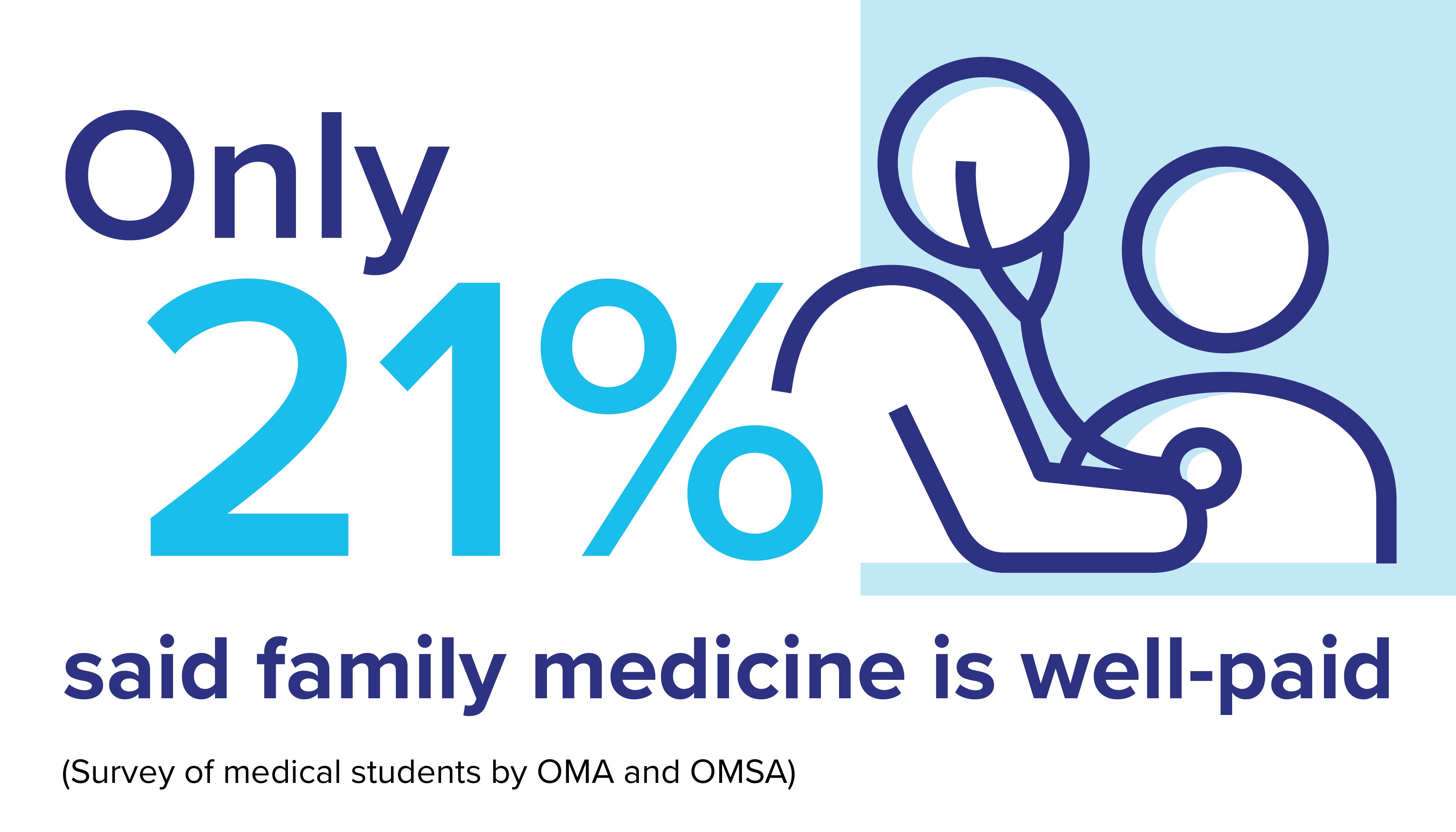
 Nearly 40 per cent either agreed or strongly agreed that family medicine is a backup specialty. Only 21 per cent agreed or strongly agreed that family medicine is well-paid.
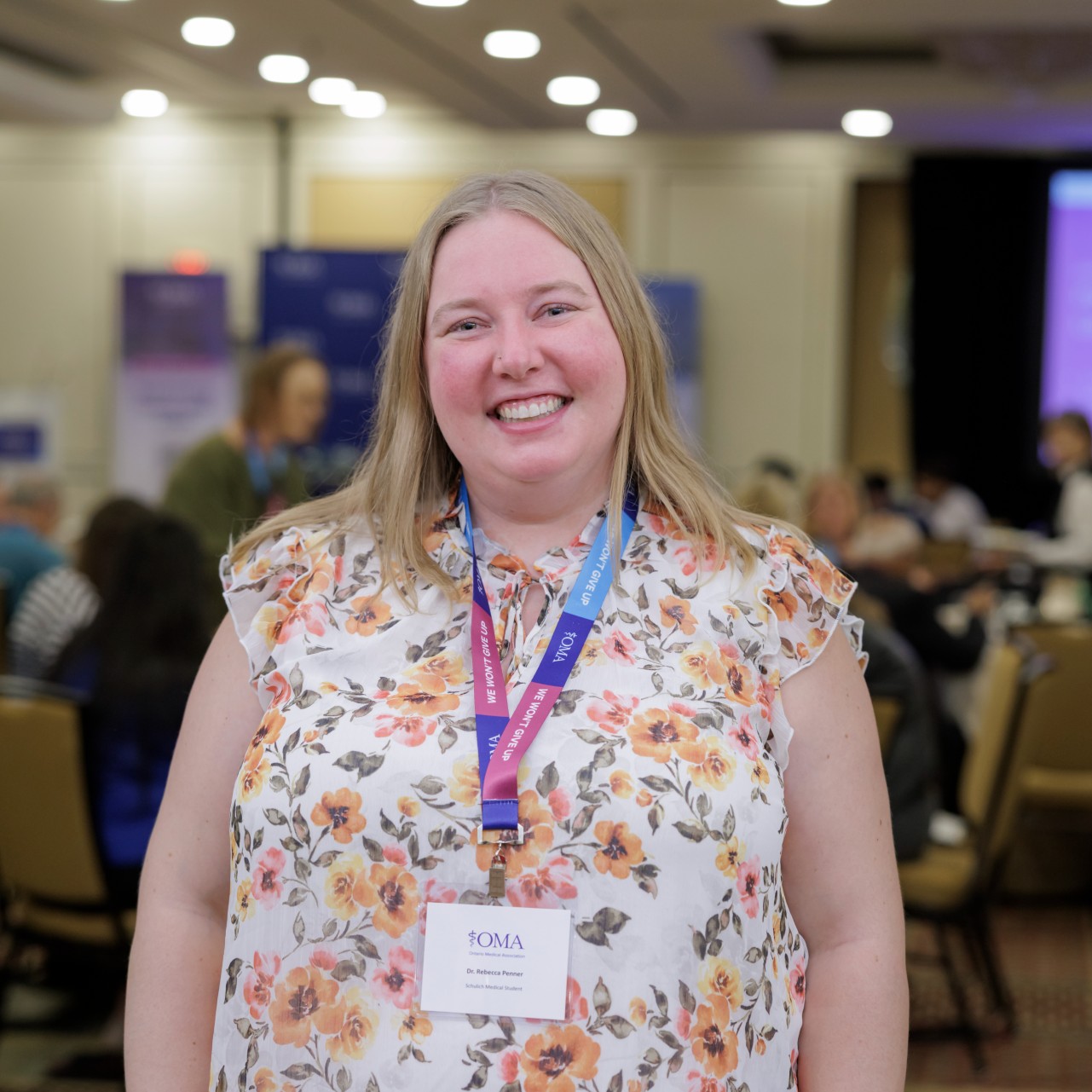
Rebecca Penner, a first-year student at Schulich’s Windsor campus, says now is a terrifying time for many students to be starting their careers.
“Everybody knows that family doctors are absolutely overwhelmed with their administrative burden. And that gives me major pause,” she says.
“Whether or not I end up in family medicine or a different specialty, I know that if the shortage continues, it will affect my practice and my patients.”
Rebecca Penner is a first-year medical student at Western University’s Schulich School of Medicine & Dentistry
The survey also asked students what advantages they felt family medicine provides. Among the most popular responses were the ability to form long-term patient relationships (16 per cent of respondents), a shorter duration of residency (16 per cent) and more flexible working hours (15 per cent). The variety of medical cases and breadth of medicine practised (15 per cent) and the opportunity to pursue enhanced skills training (15 per cent) were also cited.
The survey featured medical students from McMaster University, NOSM University, Queen’s University, University of Ottawa, University of Toronto and Western University, from all years of study. Fifty-six per cent of respondents were pre-clerkship and 42 per cent were in clerkship.
The survey was completed by the Ontario Medical Students Association and OMA.
We’re advocating for the government to expand funding for family medicine and accelerate innovation to help address administrative burden.