
FHO+: Continuity of care measure explained

Understand how continuity of care is measured and learn about the value, timing and real-life scenarios behind capitation adjustments in this new video series.

How it's calculated Film Icon
How it's calculated

This video explains how the Continuity of Care is measured and evaluated. It reviews: 

  • What the measure counts: Visits for in-basket services made by your rostered patients to family physicians (OHIP specialty ‘00’) 
  • The list of acceptable physicians that count towards your measure 
  • The threshold is 75 per cent for each quarter 

Within a quarter, 75 per cent or more of visits for in-basket services should be to you, another physician in your FHO group, or to an acceptable physician.

Continuity of care is the accountability measure for capitation payments in the new FHO Plus model. It measures your rostered patients' visits for in-basket services to any family physician in Ontario. It reflects all of your rostered patients, including those in long-term care.

The continuity of care measure is a percentage. It's calculated by counting the number of visits for in-basket services provided by you, another physician in your FHO, or another acceptable physician in proportion to the number of visits for in-basket services provided by any family physician with the OHIP specialty code zero zero.

Acceptable physicians include designated GP focused practice physicians, including GP psychotherapy, HIV, and care of the elderly physicians on respective  alternative payment plans, family physicians working in emergency departments and hospitals, and oculovisual physicians, billing codes A110A and A112A. Visits to these physicians for in-basket services are in your favour. They count towards your continuity of care measure. Continuity of care will be evaluated per physician on a quarterly basis. The threshold is seventy-five percent. That means at least seventy-five percent of your rostered patients' visits for in-basket services should be provided by you, another physician in your FHO group, or by another acceptable physician.

The vast majority of FHO physicians are already meeting the threshold of seventy-five percent. What's new is that the continuity of care allows for some outside use without penalty, unlike with negation, which is a dollar for dollar penalty.

To recap, continuity of care measures visits for in-basket services made by your rostered patients to any family physician in Ontario. Seventy-five percent or more of these visits should be to you, another physician in your FHO group, or to an acceptable physician.

Notifications Film Icon
Notifications

This video explains when and how you will be notified by the ministry regarding your Continuity of Care measure.

You will: 

  • Receive a monthly report of your roster’s continuity of care measure, based on the available claims data for the previous month 
  • Continue to receive your Outside Use reports

The notification provides you with an opportunity to course correct, similarly to how you would with Negation.

Continuity of care will be measured and evaluated for each individual FO physicians roster quarterly or every three months on a rolling basis and starting on April first, twenty twenty-six. Every month, you'll receive a standalone continuity of care report via MCEDT. It will show your roster's continuity of care measure for the previous month using available claims data.

Note: that for the first year, the continuity of care report will not be available through MCEDT. Instead, the ministry will send it to you a different way. This alternative distribution method will be temporary. You'll still continue to receive your outside use reports, so you can use those to see which patients accessed care outside of the acceptable physicians. 

For any single quarter that your roster is below the seventy-five percent threshold, you'll receive a notification from the Ministry of Health via email. Because of the three-month timeframe that physicians have to submit billings to OHIP, if your roster is under the seventy-five percent threshold for a given quarter, the notification about this will come two quarters later. There is no financial consequence for being under the threshold for a single quarter.

The notification provides you with an opportunity to course correct similarly to how you would have with negation. Notifications are your opportunity to take action and make improvements.

What triggers a capitation payment adjustment Film Icon
What triggers a capitation payment adjustment

This video explains what triggers a capitation payment adjustment. It illustrates the following concepts: 

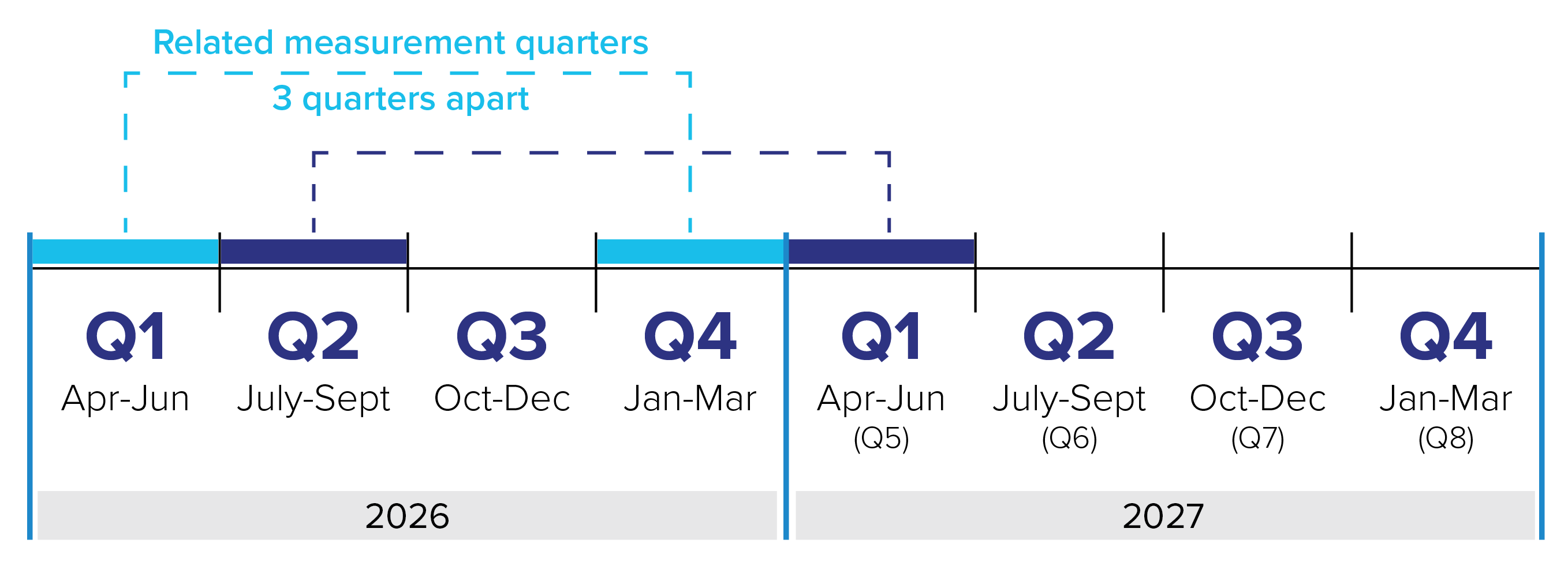
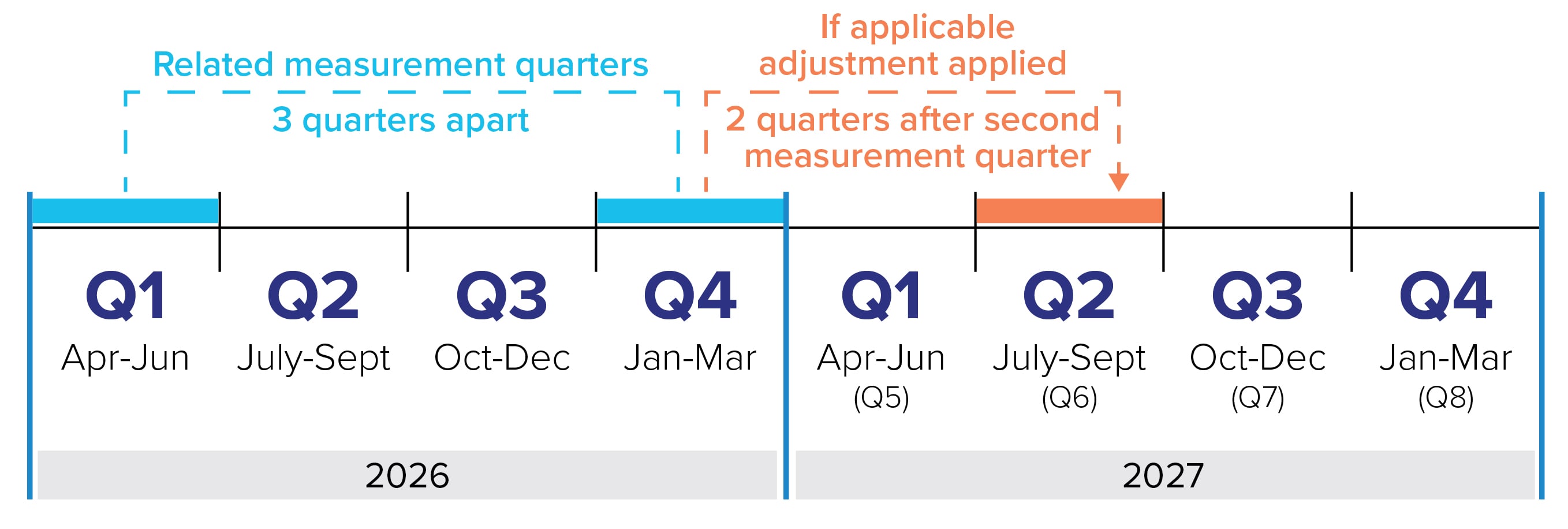
  • Related measurement quarters are three quarters apart 
  • Both related measurement quarters must be below the 75 per cent threshold for a capitation payment adjustment to apply 

This process resets every quarter and continues on a rolling basis. 

A single quarter below the 75 per cent threshold is not a reason to worry. It’s a nudge for you to review your roster’s activities and look for ways to improve.

If you are below the seventy-five percent threshold for a given quarter, the ministry provides you with a chance to course correct. Continuity of care is the accountability measure for FO Plus, which means that it's tied to potential financial consequences. These financial consequences only apply if your roster's continuity of care measure is below seventy-five percent in both related measurement quarters.

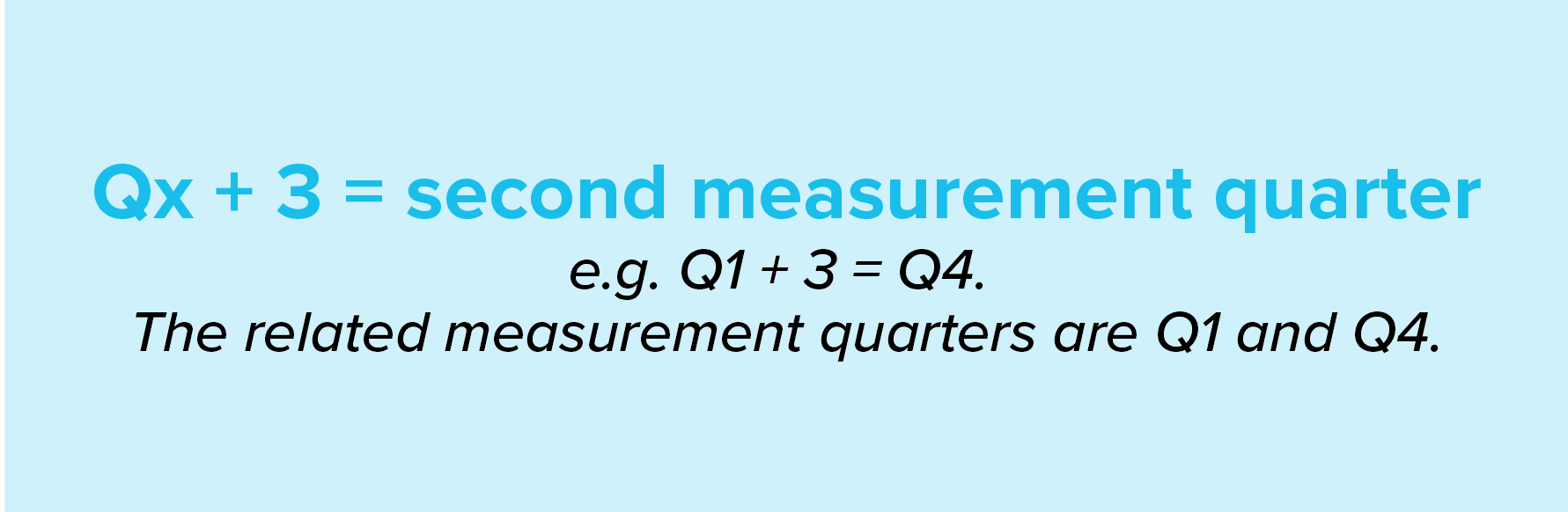
These sets of quarters are evaluated on a rolling basis. Related measurement quarters are three quarters apart. That's because of the three-month timeframe that physicians have to submit billings to OHIP. By the time you find out you're below the threshold for Q1, Q4 is the earliest quarter you could course correct. Since related measurement quarters are three quarters apart, you can think of this as X plus three. For example, for Q1, one plus three equals four. So Q1 and Q4 are the related measurement quarters. Related measurement quarters are evaluated by the ministry on a rolling basis. That means they will look at your roster's continuity of care measure for Q1 and Q4 and then Q2 and Q5 and so on. A capitation adjustment applies only if both related measurement quarters have continuity of care of below seventy-five percent.

When looking at the two related measurement quarters, if only one of them is below seventy-five percent, there is no financial consequence. However, if both related measurement quarters are below seventy-five percent, a capitation adjustment will be applied. Remember, both related measurement quarters need to be below seventy-five percent for a capitation adjustment to apply. It's very possible to have a single quarter or even multiple quarters in a year that are below the seventy-five percent threshold and to not face a financial penalty. It's all about the timing. A single quarter below the seventy-five percent threshold is not a reason to worry. It's a nudge for you to review your roster's activities and look for ways to improve.


Value and timing of the capitation adjustment Film Icon
Value and timing of the capitation adjustment

This video shows how a capitation payment adjustment is calculated and when it is applied. It illustrates the following concepts:

  • Both related measurement quarters must be below the 75 per cent threshold for a capitation payment adjustment to apply 
  • If these conditions are met, a capitation payment adjustment will be made two quarters after the second related measurement quarter 
  • The value of the adjustment is 15 per cent of the value of the base capitation payments made to you in the first of the two related measurement quarters

Facing a capitation payment adjustment in one particular quarter doesn’t mean that you’ll continue to face a penalty every quarter after that.  

The process starts again every quarter, looking only at the two related measurement quarters.

If your roster's continuity of care measure is below the seventy-five percent threshold for both related measurement quarters, an adjustment will be made to your future-based capitation payments in a specific quarter. The value of the adjustment is fifteen percent of the base capitation payments made to you in the first of the two related measurement quarters. So if both Q1 and Q4 were below seventy-five percent, the adjustment would be calculated as fifteen percent of the value of the base capitation payments made to you in Q1. The adjustment is applied in the quarter that the ministry can confirm the data. Because physicians have three months to submit billings to OHIP, the ministry can only evaluate a given quarter's continuity of care two quarters after the fact. This means that a capitation payment adjustment will be applied two quarters after the second related measurement quarter that is below seventy-five percent.

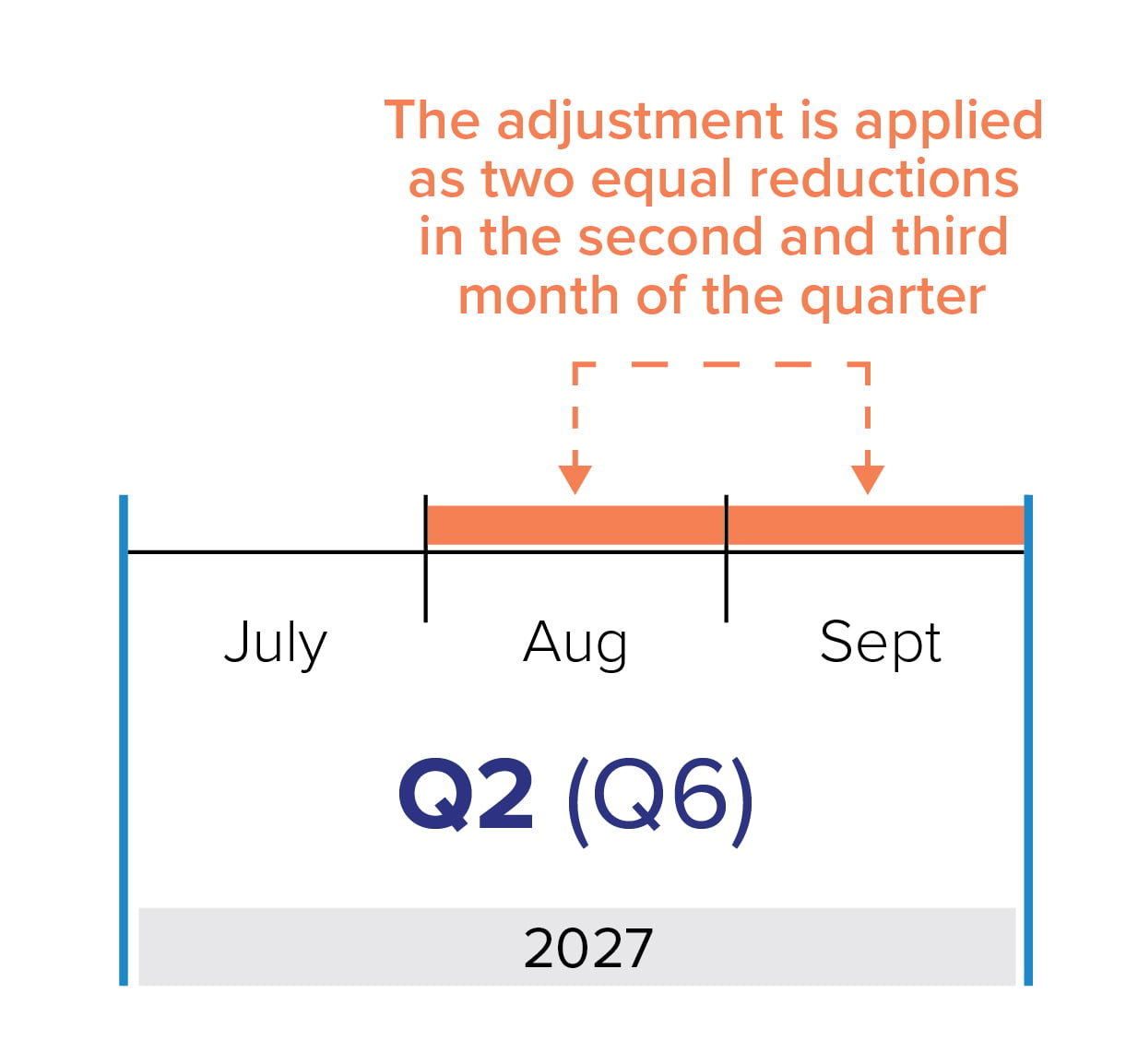
An easier way to think about this is Y plus two. If the second measurement quarter is Q4, then the adjustment quarter is Q4 plus two, or Q6. So for related measurement quarters Q1 and Q4, the adjustment would apply in Q6. Within the quarter, the value of the adjustment is split into two equal payments and then subtracted from the second and third month's capitation payments.

Remember, related sets of measurement quarters are evaluated on an ongoing basis. Facing a capitation payment adjustment in one particular quarter doesn't mean that you'll continue to face a penalty every quarter after that. The process starts again every quarter, looking only at the two related measurement quarters.

Scenarios

Scenario one: Only one quarter below 75 per cent Film Icon
Scenario one: Only one quarter below 75 per cent

This video is a case example of a physician who has a single quarter where their Continuity of Care measure is below the 75 per cent threshold. They do not face a capitation payment adjustment.

It illustrates the concept that an adjustment only applies if both related measurement quarters are under 75 per cent.

Dr. Dale is a faux physician with a roster of eighteen hundred patients in a busy urban practice. Over the years, he's found that his patients tend to access walk-in clinics close to their workplaces, leading to outside use. As a result, in the new faux plus model, Dr. Dale's roster was under the seventy-five percent continuity of care threshold in Q1 of the year, and then again in Q3. His Q2 and Q4 measurements were above the threshold.

His capitation payments remained unaffected. Why? Timing matters. An adjustment only applies if both related measurement quarters are under seventy-five percent.

That didn't happen in Dr. Dale's case, so his capitation payments were unaffected.

Scenario two: Temporary capitation adjustment Film Icon
Scenario two: Temporary capitation adjustment

This video is a case example of a physician whose Continuity of Care measure is below 75 per cent for two related measurement quarters. She is subject to a capitation payment adjustment as a result. 

She uses the information available to make adjustments to her practice and return to full capitation payments. 

It illustrates the concept that financial consequences are temporary if the physician’s Continuity of Care measure improves.

Dr. Oscar is a faux physician and has seen increased outside use amongst her patients. This led to her roster's continuity of care measure falling below the seventy-five percent threshold twice: in Q one and in Q four. This triggered a temporary fifteen percent adjustment to her capitation payment in Q six. This was the first time she faced a financial consequence in the new faux plus model.

Starting in Q seven, Dr. Oscar returned to receiving her full capitation payments. How?

Financial consequences are temporary. Dr. Oscar looked at her outside use report to see which patients were accessing care outside her clinic. She spoke with some of them to understand their reasons for outside use. Then Dr. Oscar was able to optimize her practice by offering more virtual care options for her patients. In the year following, her continuity of care measure was consistently above seventy-five percent.

Step by step: understanding the potential financial consequences

The continuity of care measure for each FHO physician is calculated quarterly and evaluated on a rolling basis. If your roster’s continuity of care is below the 75 per cent threshold for both related measurement quarters, an adjustment will be applied to a future quarter. The adjustment is calculated on the value of base capitation payments, excluding acuity payments.
A capitation adjustment is only applied if both related measurement quarters are below the 75 per cent continuity threshold. This means that more than 25 per cent of your in-basket visits were provided by physicians outside of the acceptable list for each of the two related measurement quarters.

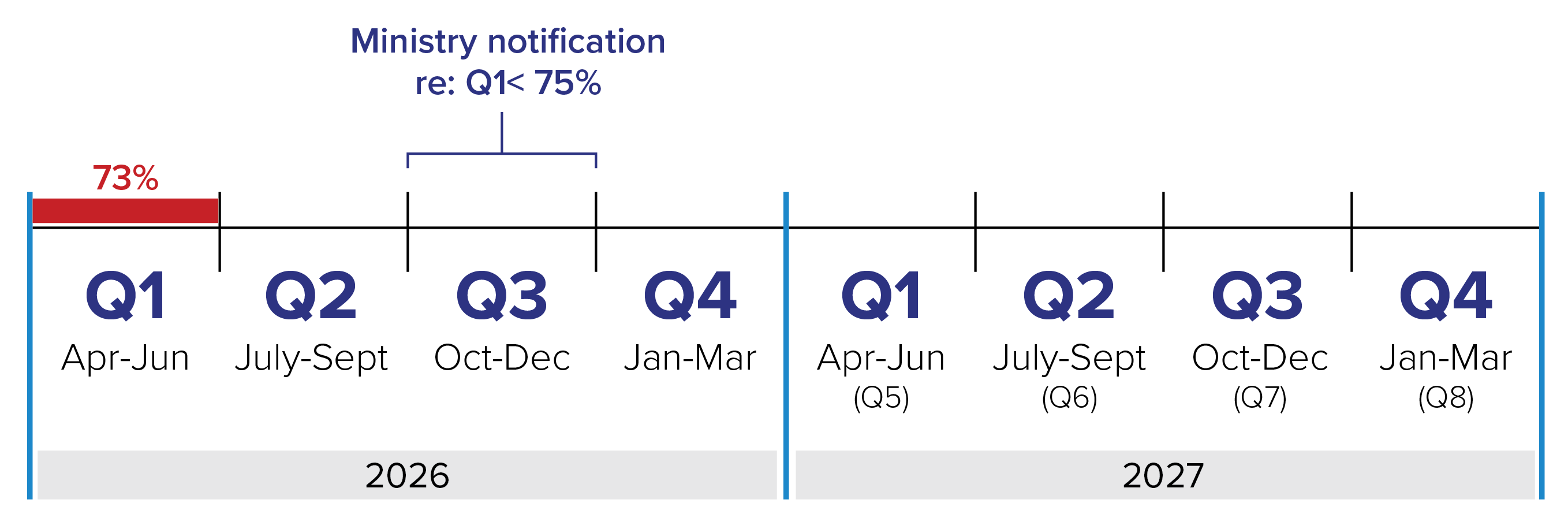
For any quarter that your roster is below the 75 per cent continuity threshold, you will be notified by the ministry via email two quarters afterward. For example, if your roster is under 75 per cent in Q1, you will be notified in Q3. For Q2, you will be notified in Q5, and so on. This is because physicians have three months to submit billings to OHIP, so the earliest the Ministry can evaluate your roster for Q1 is at the start of Q3.
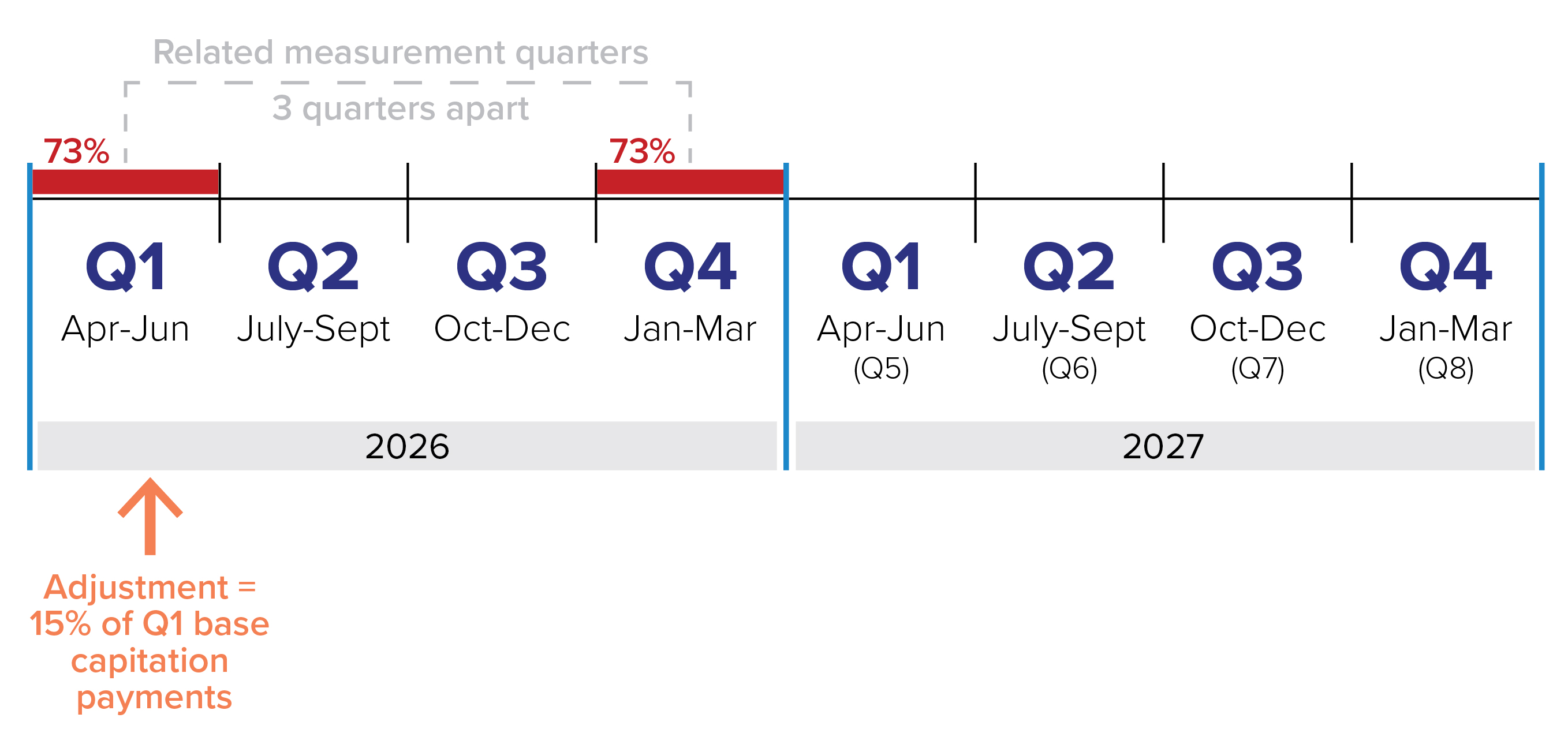
The amount of the adjustment is 15 per cent of the value of the base capitation payments made to you in the first of the two related measurement quarters. So if both Q1 and Q4 are below the 75 per cent continuity threshold, the adjustment would be 15 per cent of value of the base capitation payments made to you in Q1. The adjustment is calculated on the value of base capitation payments only, not acuity payments.
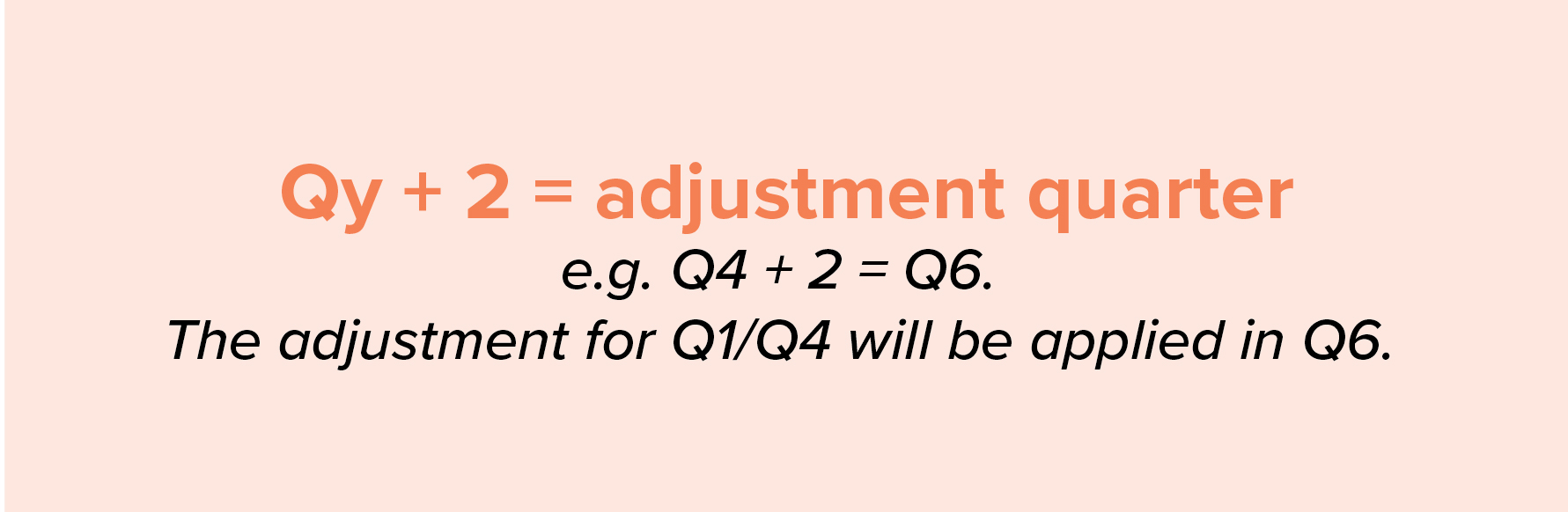


The adjustment is applied once the ministry can confirm the second instance of being under the 75 per cent threshold. This is two quarters after the fact. This is because physicians have three months to submit billings, so the earliest the ministry can measure a given quarter’s continuity of care is three months + one day after the quarter in question.

For example, if Q1 and Q4 are both below the 75 per cent continuity threshold, the resulting adjustment is applied in Q6.


The value of the adjustment will be split into two equal amounts that will be subtracted from your base capitation payments in the second and third month of the adjustment quarter.
Interactive calculator

To experiment with how this will work in practice, access the OMA’s Continuity of care calculator/worksheet

Published: March 19, 2026  |  Last updated: March 19, 2026