

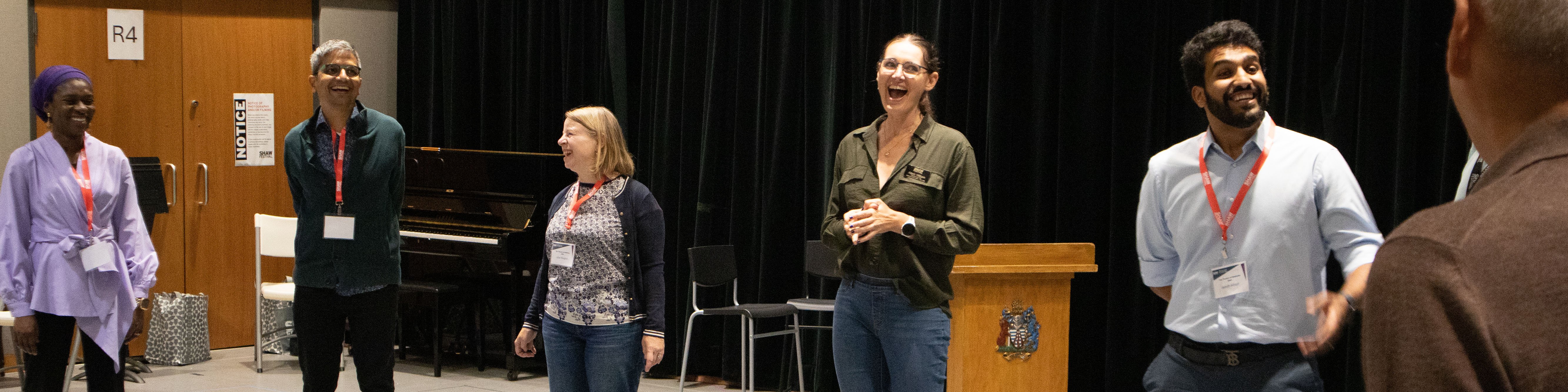
Shaw Festival program helps physicians strengthen communication, presence and care
 Medicine has always required both technical expertise and sound judgment.
But the heart of the work is often less easily measured, says Dr. Glen Bandiera, an emergency physician at St. Michael’s Hospital in Toronto.
It’s the human connection formed in exam rooms and at hospital bedsides every day, he says, and the ability to form them in an increasingly complex, high-pressure health-care system matters more than ever.
That’s where the Theatre of Medicine comes in. Co-created by the Shaw Festival and the Royal College of Physicians and Surgeons of Canada, it’s an accredited continuing professional development skills course for physicians that offers a structured way to train and upskill for this reality.
“The skills that artists are taught are highly relevant for physicians – particularly the ability to empathize and relate to another individual in a very short period of time,” says Dr. Bandiera, a co-ordinator of the program who also formerly served as executive director at the Royal College of Physicians and Surgeons of Canada.
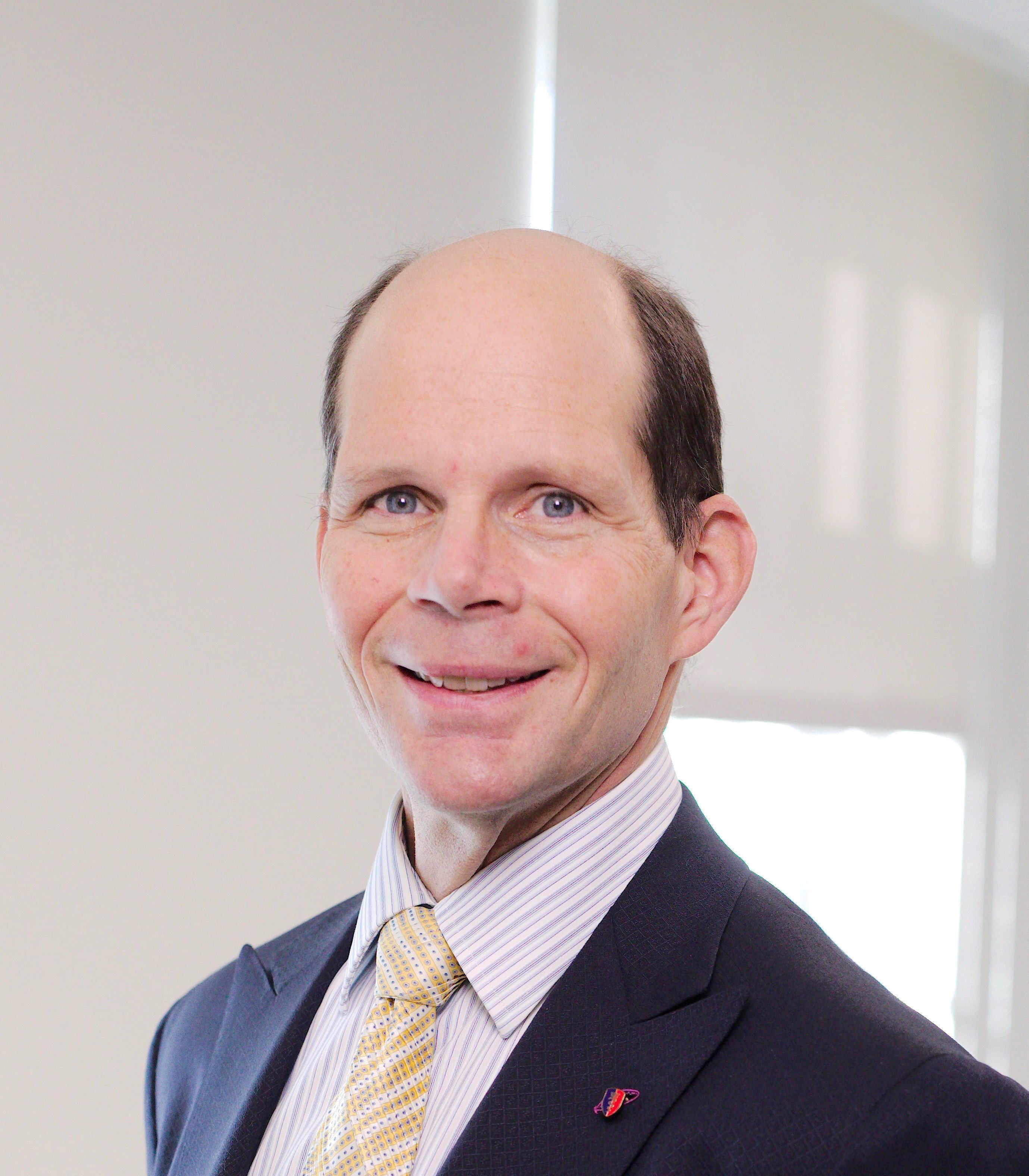
Dr. Glen Bandiera is an emergency physician at St. Michael’s Hospital in Toronto and a co-ordinator of the Theatre of Medicine program at the Shaw Festival.
 Dr. Bandiera was serving on the Shaw board of directors when he was introduced to Alexis Milligan, the festival’s movement director.
The two connected over Dr. Bandiera’s growing recognition that non-technical skills – such as empathy, responsiveness and presence – were under-taught in medicine, and Milligan’s long experience teaching those exact skills to artists.
They formed a pilot in 2024 that evolved into the three-day Theatre of Medicine program, now entering its third year at the festival and certified for Continuing Professional Development credits through the University of Toronto’s Temerty School of Medicine.
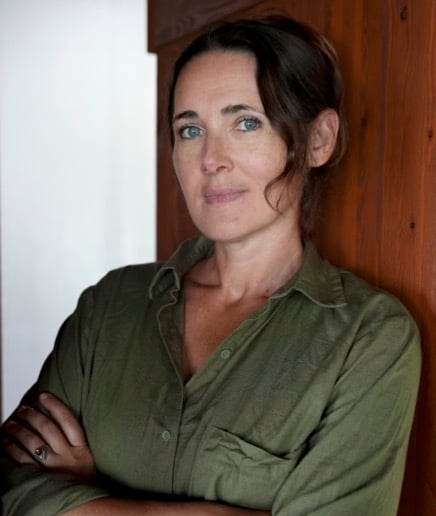
Alexis Milligan is the director of movement at the Shaw Festival and a co-ordinator of the Theatre of Medicine program.
Experiential learning through action and reflection is far more meaningful than sitting in a classroom listening to an expert, says Dr. Bandiera. Participants learn the art of improvisation, as well as vocal awareness, physical presence and self-awareness under stress.
“We don’t do icebreakers,” says Milligan, who holds a master’s degree in interdisciplinary studies focused on the intersection of performing arts education, communication and neuroscience. Instead, sessions focus on applied skills like listening under pressure, calibrating tone and maintaining presence.
Milligan describes a deceptively simple listening exercise that nearly always fails the first try because few people truly listen with intent.
The failure becomes the lesson, she says – a way to recognize that active listening isn’t just about paying attention yourself, but about helping others to listen, especially under extreme pressure – like when receiving a terminal diagnosis.
This isn’t about faking authenticity, either, adds Dr. Bandiera.
Successful acting is rooted in authentic empathy and dynamic, two-way communication – skills that are also critical for doctors. Whether verbal or non-verbal, these skills can be learned and can enhance communication between doctors and patients.
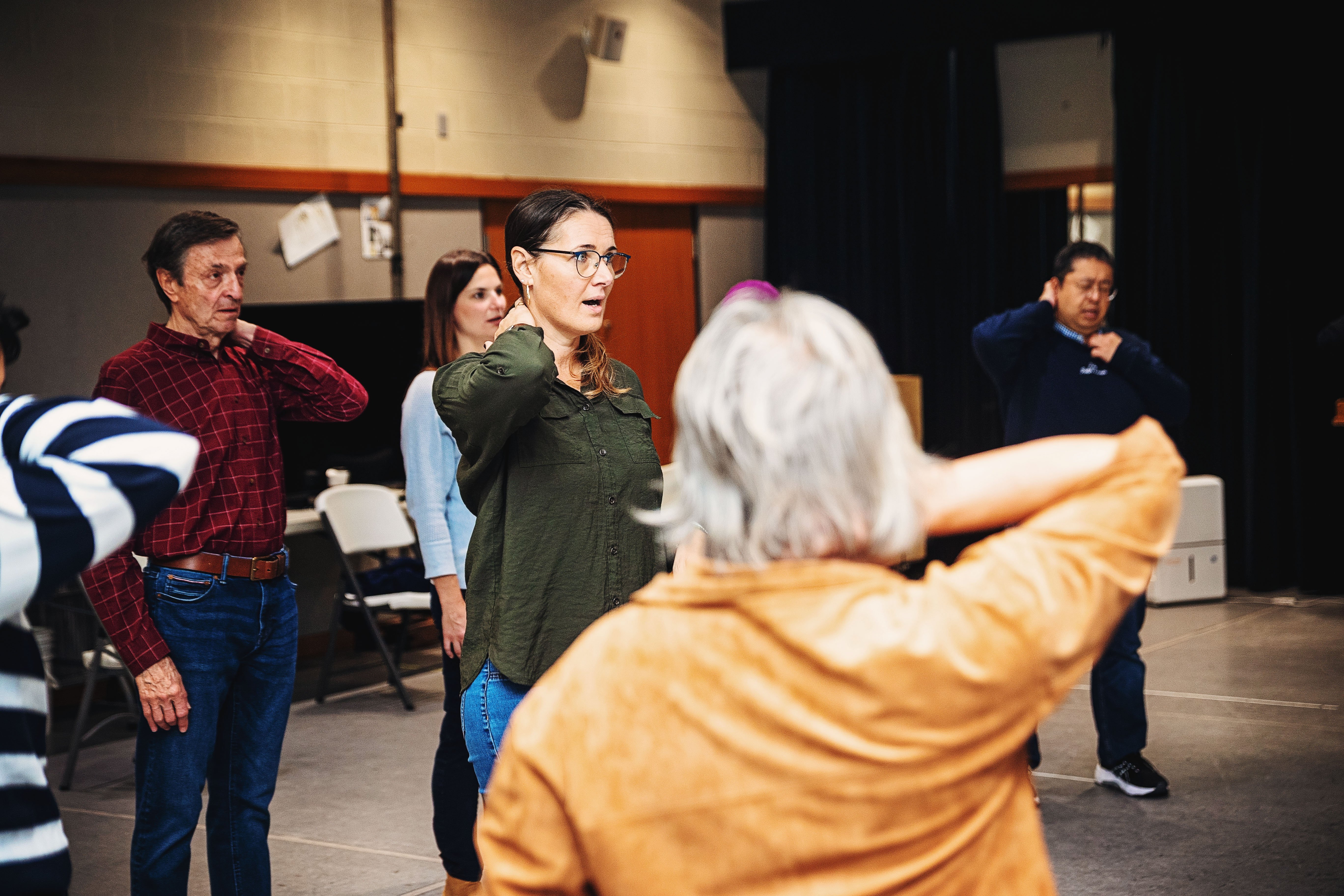
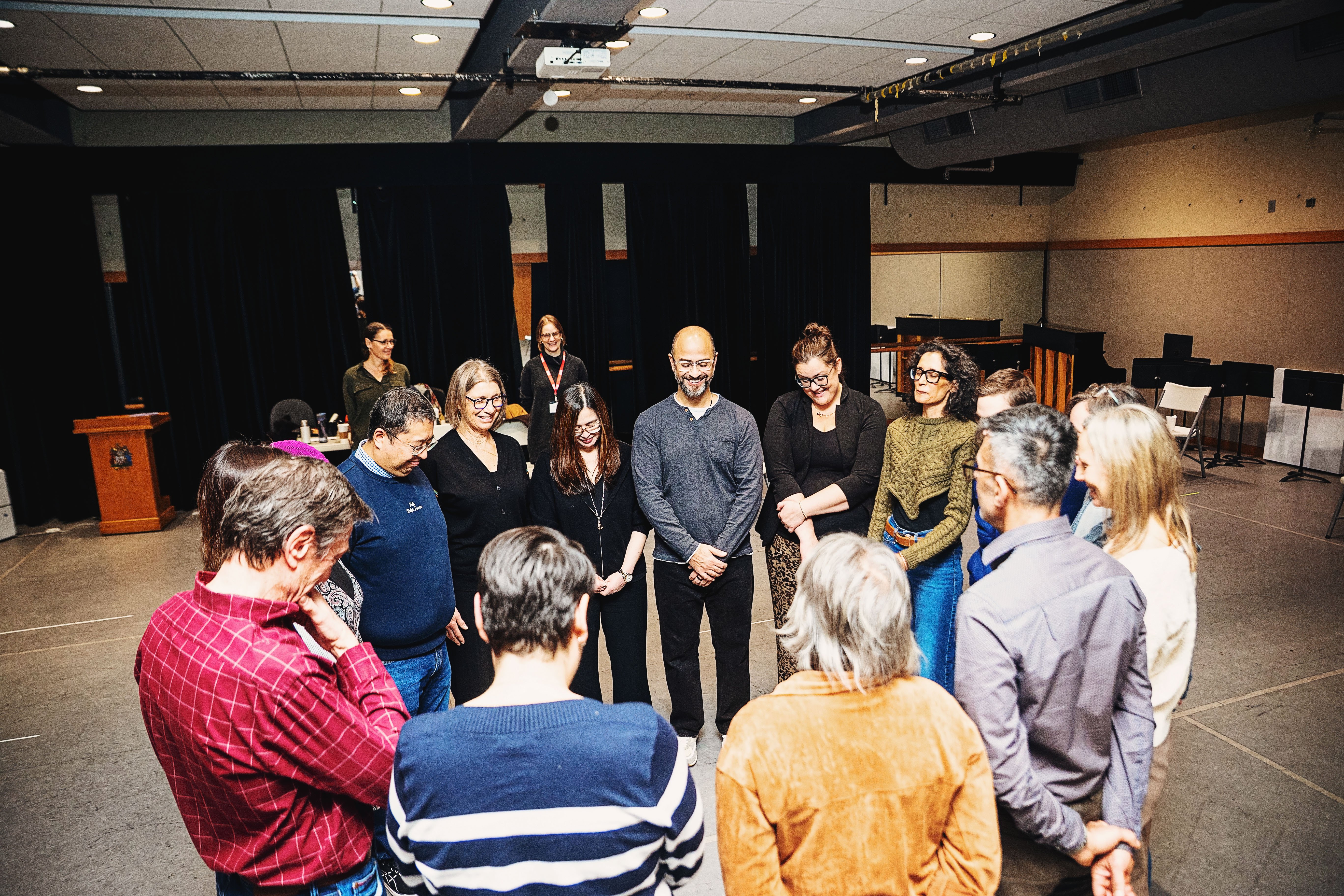
Participants in the Theatre of Medicine program learn the art of improvisation, as well as vocal awareness, physical presence and self-awareness under stress. Photo credit: Peach Juice Creative.
“How quickly I move, where I position myself in the exam room, it makes a huge difference,” he says. “I've seen that completely change interactions with patients within 30 seconds.”
 Milligan believes the impact of this training extends well beyond communication techniques. Learning how to be present, she says, also helps physicians sustain themselves in a health-care system increasingly defined by burnout.
“Caring for another human being goes both ways,” she explains, noting that when physicians are equipped to connect meaningfully with patients, it can also protect their own well-being.
And at a time when the physician’s role is changing dramatically, and medicine becomes more technologically driven, Dr. Bandiera says this takeaway is both practical and urgent.
“At the core,” he says, “the arts remind us of our shared humanity.”
The skills taught in the program can enhance authentic communication between doctors and patients, say Milligan and Dr. Bandiera. Photo Credit: Peach Juice Creative.