

OMA Presidential Award recipient Dr. Dilkhush Panjwani reflects on five decades in medicine across three countries, and why dignity and access matter most
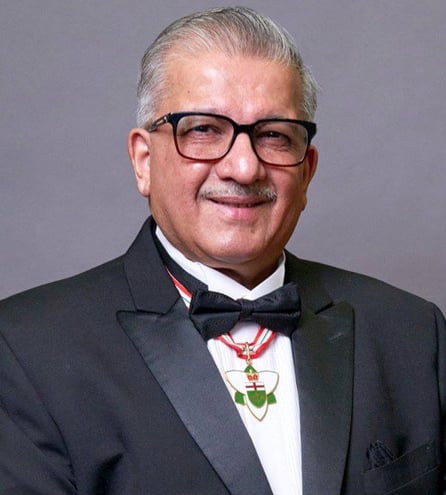
Dr. Dilkhush Panjwani sees his nearly half-century-long career in psychiatry as part of a lifelong commitment to mental-health care, service and social justice.
The 2024 OMA Presidential Award winner says that working across vastly different health-care systems in India, the U.K. and Canada has shaped this advocacy-driven approach to patient care.
“It’s given me a broad and deeply enriching perspective on mental health care across different cultures, societies and health-care systems,” says Dr. Panjwani, who graduated from the Armed Forces Medical College in Pune, India, in 1975. He completed his post-graduation studies in psychiatry at the Seth G.S. Medical College and the King Edward Memorial Hospital in Mumbai.
Though he began his medical career in internal medicine, Dr. Panjwani was drawn to psychiatry early on, inspired by a medical school professor who sparked his interest in mental health.
He went on to focus his clinical and research work on schizophrenia.
After marrying in 1980, Dr. Panjwani moved to England to work at Horton Hospital, a former psychiatric institute in Epsom, Surrey.
Later, he worked at Maudsley Hospital, a psychiatric institute in south London, where he was exposed to prominent figures in psychiatry — such as famed British psychiatrist William Lishman — who strongly influenced his approach to clinical practice.
“Maudsley was considered the mecca of psychiatry, in those days,” he says.
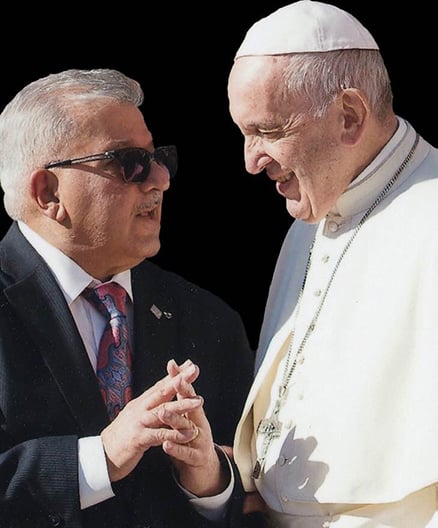
Dr. Panjwani’s move to northern Ontario in 1986 was a significant adjustment. It was marked by a new climate, geographic isolation, and long travel distances between hospitals — often with limited resources.
“First-hand, I saw how limited access to mental-health care and other medical care can affect individuals and families. They had to travel miles and miles to see a family physician or a specialist,” he says.
He settled in Timmins, Ont., initially as the only psychiatrist in the region. Much of his work took place in under-serviced communities such as Kapuskasing, Matheson, Cochrane and Moosonee.
While living in northern Ontario, he also prioritized direct advocacy by working with local elected officials to address health-care gaps.
“I tried to narrow some of the gaps and bring some equity, accessibility and inclusivity,” says Dr. Panjwani, who also served on several boards including the Canadian Mental Health Association and Children’s Aid Society, as well as president of the Indo-Canadian Psychiatric Association.
“My goal was not just psychiatric treatment. It was to restore dignity and reduce the stigma of mental illness.”
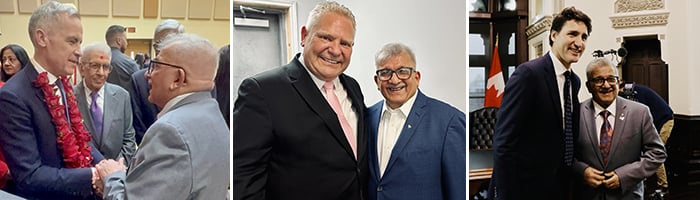
Dr. Panjwani moved to Toronto in the 1990s to work with Trillium Health Partners, where he still practices today as a consultant psychiatrist. He is also an assistant professor at the University of Toronto.
Despite receiving numerous awards throughout his career — such as the Order of Ontario in 2018, the Queen Elizabeth II Diamond Jubilee Medal in 2012, Prix d’Excellence – Specialist of the Year Award from the Royal College of Physicians & Surgeons of Canada in 2016, and the King Charles III Coronation Medal in 2025 — Dr. Panjwani says a good career cannot be measured by awards alone.
“In my case, it's about the lives I’ve touched, the challenges I’ve overcome over the last 50 years, and how many people I’ve helped.”
The OMA Awards and Recognition Program recognizes the work of physicians, residents, medical students and community members in Ontario.