


Toronto’s Dr. Andrew Boozary recognized for innovative supportive housing project
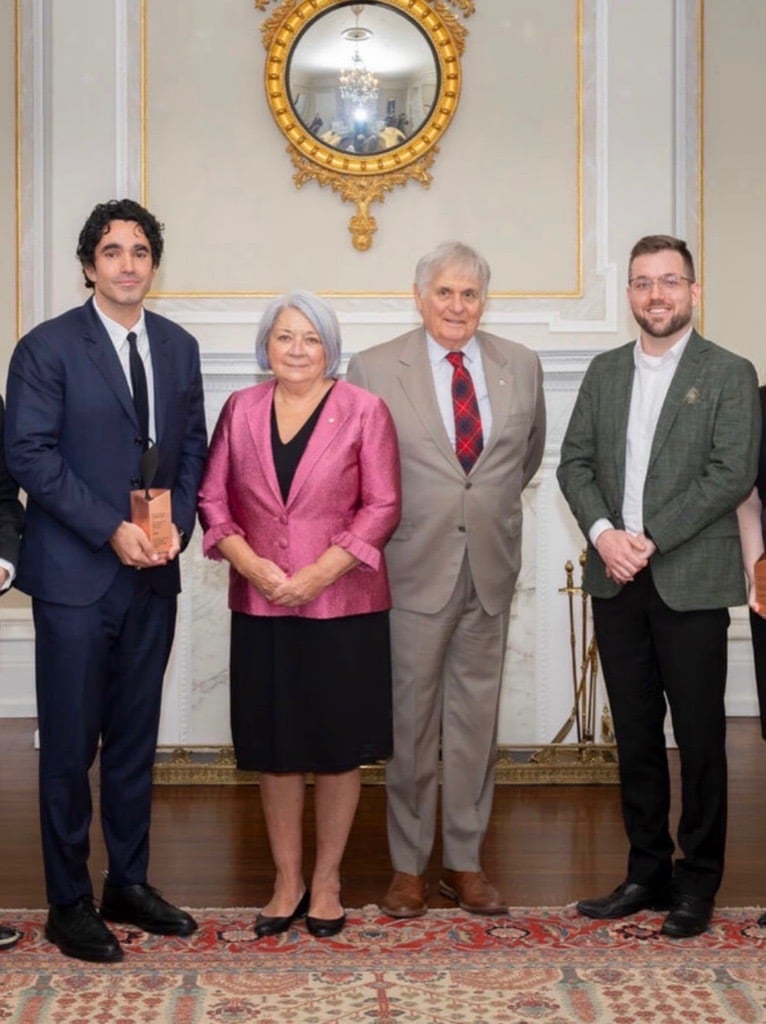
Dr. Andrew Boozary spearheaded Canada’s first hospital-led social medicine housing initiative, transforming a Toronto parking lot into 51 supportive housing units for homeless patients at University Health Network.
This project, called Dunn House, has resulted in a 62-per-cent drop in Emergency Department visits in the past 18 months, while enhancing the lives of its tenants and the surrounding neighbourhood.
Its success has received national attention. Dr. Boozary was recently honoured with the prestigious Innovation Award which recognizes trailblazing Canadians.
But his work doesn’t stop there. Dr. Boozary says he’s committed to creating a holistic and integrated approach to health care for Canadians.
“My only hope is that this award helps us move away from this conventional thinking in medicine of what's inside and outside our lane,” Dr. Boozary tells the OMA.
Following a successful rollout, Phase 2 of Dunn House has been approved by city council with 54 supportive homes slated to be built in 2027 and prioritized for homeless senior patients.
“The mantra that we've had in health care for far too long is that if you build it, they will come,” says Dr. Boozary. “But in reality, we need to deliver care where people are at.”
Born and raised by immigrant parents from Iran in Toronto’s St. James Town neighbourhood, Dr. Boozary saw the power of social housing around him. He saw first-hand how housing and health are interconnected.
Driven by a passion for system reform, he completed his medical training at the University of Toronto and health policy education at Princeton University and Harvard University.
In 2019, Dr. Boozary, who is the founding executive director of the Gattuso Centre for Social Medicine at UHN, pitched the idea of a supportive housing initiative for Toronto’s most vulnerable residents, and Dunn House was born.
The rent-geared-to-income housing complex opened in October 2024 for UHN patients who are homeless and visit the Emergency Department frequently.
Dr. Boozary says UHN has since seen a nearly 80-per-cent drop in the number of days Dunn House tenants stay at the hospital and nearly $2 million in cost avoidance for the hospital.
“To me, the most powerful key performance metric is human dignity,” says Dr. Boozary. “People can shape and bend their own health trajectories, reconnect with family and friends, return to school – and become part of a community that was denied to them for far too long,” he says.
An outcome that is not often measured, Dr. Boozary says, is how quickly the Dunn House residents have become a vibrant part of the neighbourhood in Toronto’s west end.
“The tenants have become such important neighbours in Parkdale, advocating for housing, harm reduction, the supports that people need,” he says.
Dr. Boozary recently teamed up with the Toronto Public Library to launch mobile health clinics across the city. This new project aims to reduce barriers to access by bringing primary health-care services directly to vulnerable people in their communities.
“The mantra that we've had in health care for far too long is that if you build it, they will come,” says Dr. Boozary. “But in reality, we need to deliver care where people are at.”
One mobile clinic near Toronto’s Kensington Market is already open five days a week. The outfitted van provides physical exams, cancer care, substance-use care, mental health counselling and other services.
When asked about future projects, Dr. Boozary playfully said “coming soon,” and added that he’s continuing his work at the Gattuso Centre to design a more equitable health-care system.
For medical learners seeking to work in health policy, he says it’s essential to keep a system-level perspective.
“Policy systems underlie so many of the clinical conditions and situations that come into practice,” he says. “Exploring and understanding them more deeply will reap benefits over a longer period of time for communities and patients that we serve,” he says.
You can't tackle health injustice from a distance. Whether it's a shelter clinic, drop-in, or community organizing event, the work starts by showing up where people actually are. Proximity isn't charity — it's how you learn what the system gets wrong.
Housing, income, food — these aren't "soft" determinants, they're clinical interventions with measurable outcomes. If a pill reduced hospital bed days, we'd fast-track it. We have that evidence for supportive housing. The gap isn't knowledge, it's action.
Renowned 19th-century physician Rudolph Virchow famously said that “physicians are the natural advocates of the poor.” You can prescribe medication and still name the policy failures making your patients sick.