


A family physician shares tips to keep conversations productive, informed and patient-centred
For years, patients have been coming into exam rooms with information they’ve found online.
Increasingly, it’s coming from artificial intelligence, including chatbots and AI search results. Some patients now arrive with possible diagnoses, treatment options and adverse effects to medications, as well as AI-generated visit notes.
We spoke with Dr. Mario Elia, a family physician from London, Ont., and an OntarioMD peer leader, about what he’s seeing and how he’s responding.

“Patients are either referring to AI results on their own to keep organized or providing me a copy to give me an idea of their concerns,” says Dr. Elia.
He sees this as a new version of a familiar reality: patients arriving with ideas, worries and expectations shaped by outside information.
Rather than dismissing AI-generated information outright, he encourages physicians to see it as a sign patients are engaged in their health.
“I always try to give them the impression that it is important for them to bring things to me that they’re reading or coming across, and then I’ll give my opinion on it,” he says.
A dismissive response may simply make patients less likely to disclose information to you in the future, he says.
Dr. Elia doesn’t think physicians need to ask every patient whether they used AI.
Instead, he prioritizes broad, open-ended questions that surface concerns without creating shame or judgment. For example: Was there anything you’ve come across that you were concerned about?
“It’s really important for us to know what they thought the diagnosis was going to be before they came in,” he says, adding that if the physician doesn’t ask about that concern, they may unknowingly leave it unaddressed.
Dr. Elia uses these conversations to explain AI’s limitations, including its tendency to present inaccurate information confidently.
“The longer you use it, the more likely you are to not use your own judgment and critical thinking,” he says.
“I would rather patients err on the side of not trusting it at this point, because in my day-to-day practice I see how people can go down a rabbit hole after assuming veracity in the answers it’s giving.”
Dr. Elia also cautions patients to be wary about their privacy, since commercial AI applications may not be bound by law to protect personal health information.
“Patients don’t always understand that the information they share is not just between themselves and the AI – that data flows through a company’s system,” he says.
AI can also cause harm.
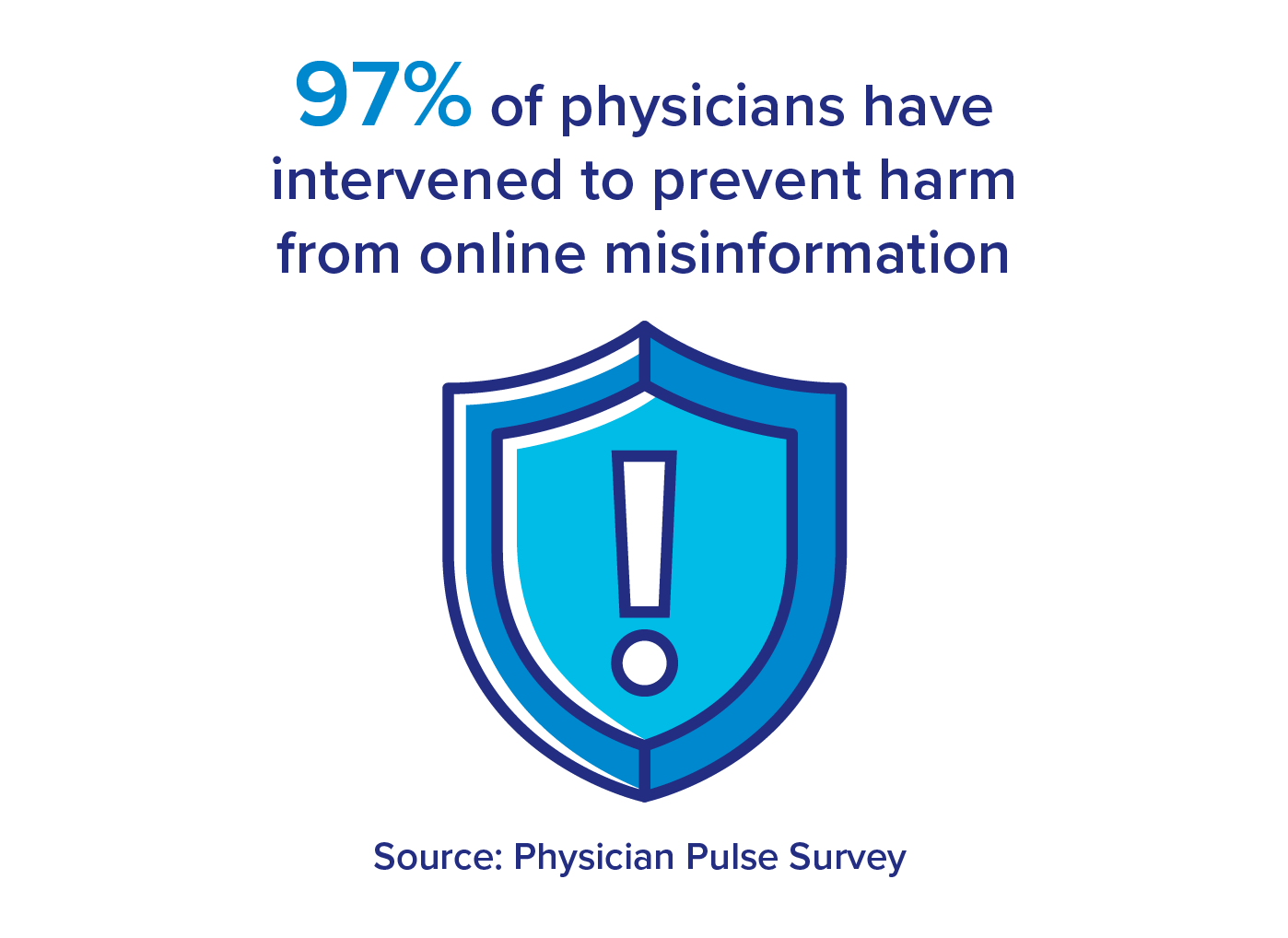
A recent Physician Pulse survey found 97 per cent of Canadian physicians have had to intervene to prevent harm or address consequences after a patient followed false or misleading health information online, including from AI.
Dr. Elia says this risk is concerning in areas such as mental-health support and reinforces the importance of maintaining open conversations with patients about AI use.
Trust is still built through respectful listening, clinical judgment and honest guidance, he says.
“The overwhelming majority of our patients still hold us in high regard,” he says. “Rather than being defensive and trying to prove our expertise and argue with those who question it, my approach has always been humility and honesty about what I know and don’t know.”