

The OMA Innovator Award winner shares how curiosity, collaboration and big-picture thinking shape his work across medicine
Outer space and family medicine may seem light years apart, but for Dr. Farhan Asrar there’s a common thread: the need to think differently to continue improving.
That mindset has shaped his career, bridging frontline medicine, public health and the rapidly emerging field of space medicine.
A Mississauga-based family physician, public health specialist, space medicine researcher, associate professor at the University of Toronto and associate dean at Toronto Metropolitan University’s School of Medicine, Dr. Asrar is the recipient of the 2024 OMA Innovator Award.
We sat down with him to learn more about his career path, curiosity and innovative work.
Family doctors have this unique relationship with patients that I would say no other field really has, where you’ve got to approach them holistically. You’re looking at not only the medicine, but also preventive and supportive care.
From the public health side, I’ve always been a bigger-picture person, looking at how we make a difference at a population level.
I think it was the combination of both these fields that really fascinated me.
Space research is also probably one of the best role models for how individuals from different countries, disciplines and political spheres can work together – a role model for health care, plus other fields on Earth. — Dr. Farhan Asrar
This field has really been making a difference, for example with technologies like portable ultrasounds or even ear thermometers, which originated from the space sector. Modern telemedicine and virtual care also came from there.
Several other technologies also have roots in space, such as a robotic arm developed with the same people who developed the Canadarm, and it’s the world’s first robotic arm for surgical purposes in an MRI machine. They call it the neuroArm.
Space research is also probably one of the best role models for how individuals from different countries, disciplines and political spheres can work together – a role model for health care, plus other fields on Earth.
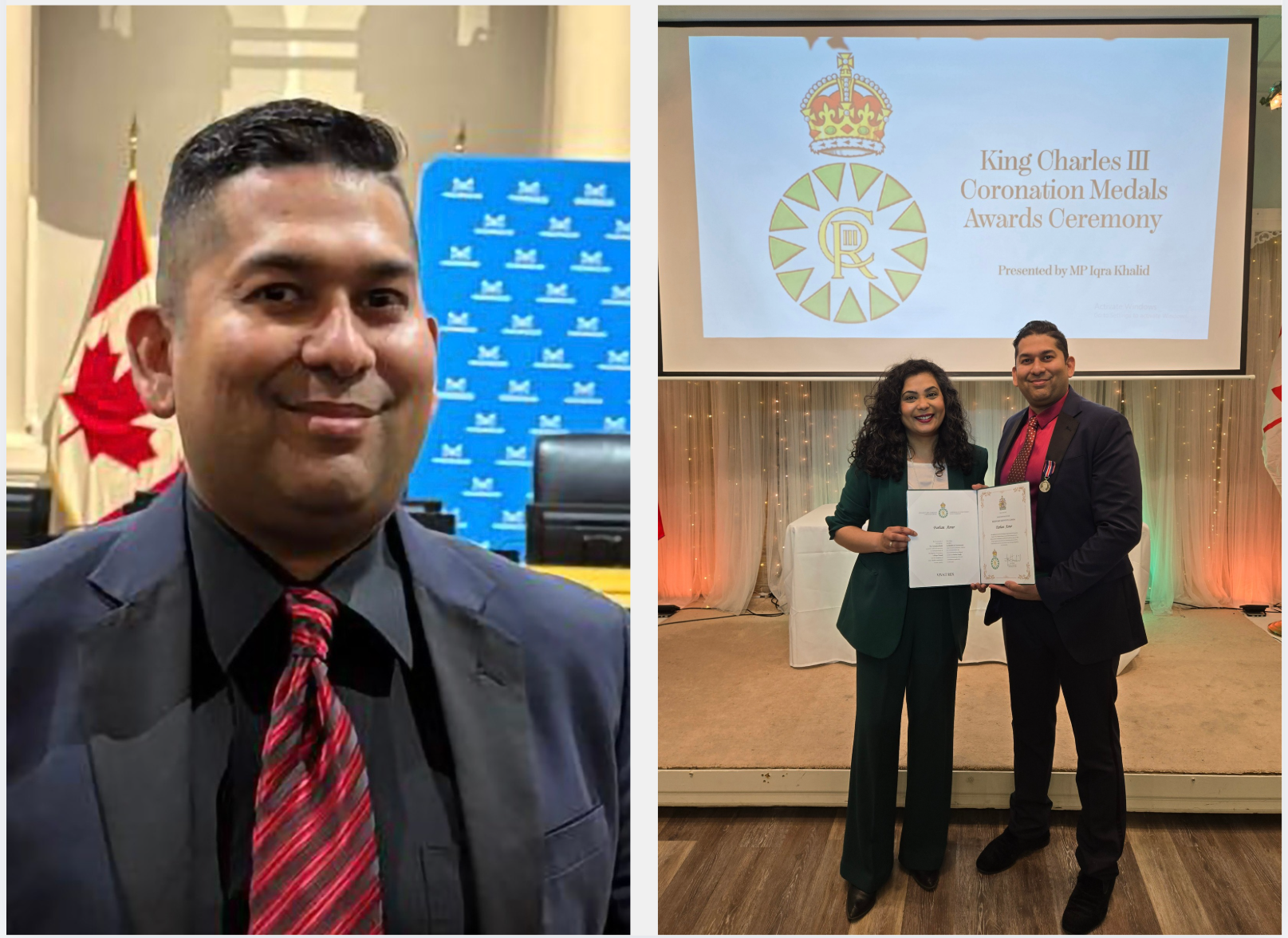
I’m interested in anything and everything related to space! Currently, there are three areas I’d highlight. One is continuing to explore the various health and psychosocial aspects of humans in deep space. Another is looking at how the space sector and space technology can help support persons with disabilities.
I’m also working on another project with my wife, Safa Siddiqui, who is a nuclear engineer and a STEM champion. We’re looking into STEM education to advance women in the nuclear and space sectors.
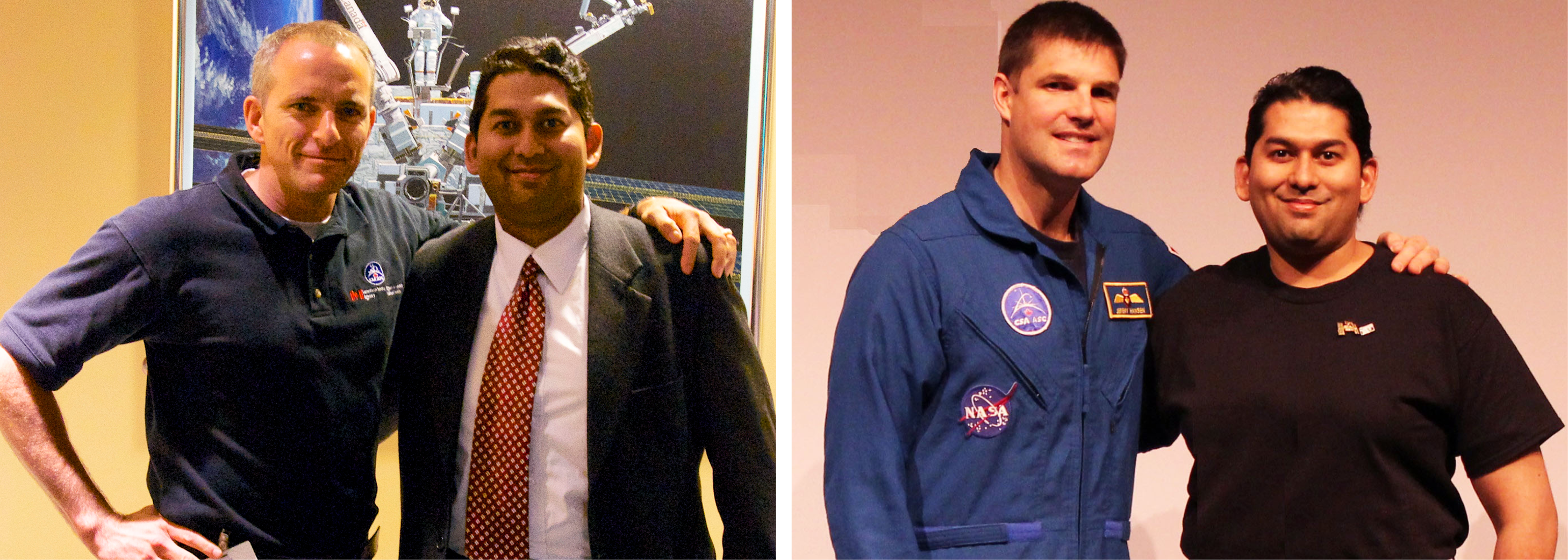
He’s great. Meeting him and other astronauts has always been inspiring. I’ve also met and collaborated with other Canadian and NASA astronauts such as Dr. David Saint-Jacques and Dr. Dave Williams. It’s really a treat to just listen to them and hear about their experiences.
Interestingly, with NASA’s recent Artemis II lunar flyby mission, there was a time – when they were at the far side of the moon – where communication was cut off for 40 minutes. That got me thinking, what if a medical emergency arose at that time? It’s really raised many questions for the future of space medicine when considering the moon and Mars.
I feel that the award encourages physicians to think outside the box, especially with so many medical and health-system challenges today. So many Ontario-based physicians are making a difference at an individual patient level, as well as at provincial, national and international levels. The award highlights the importance of encouraging others to explore out-of-the-box solutions for our existing challenges.
The OMA Awards and Recognition Program recognizes the work of physicians, residents, medical students and community members in Ontario.