


A pilot peer group initiative with the Physician Health Program offers connection, shared experience and peer support
Going from the white coat to the blue gown can be a powerful shift in identity.
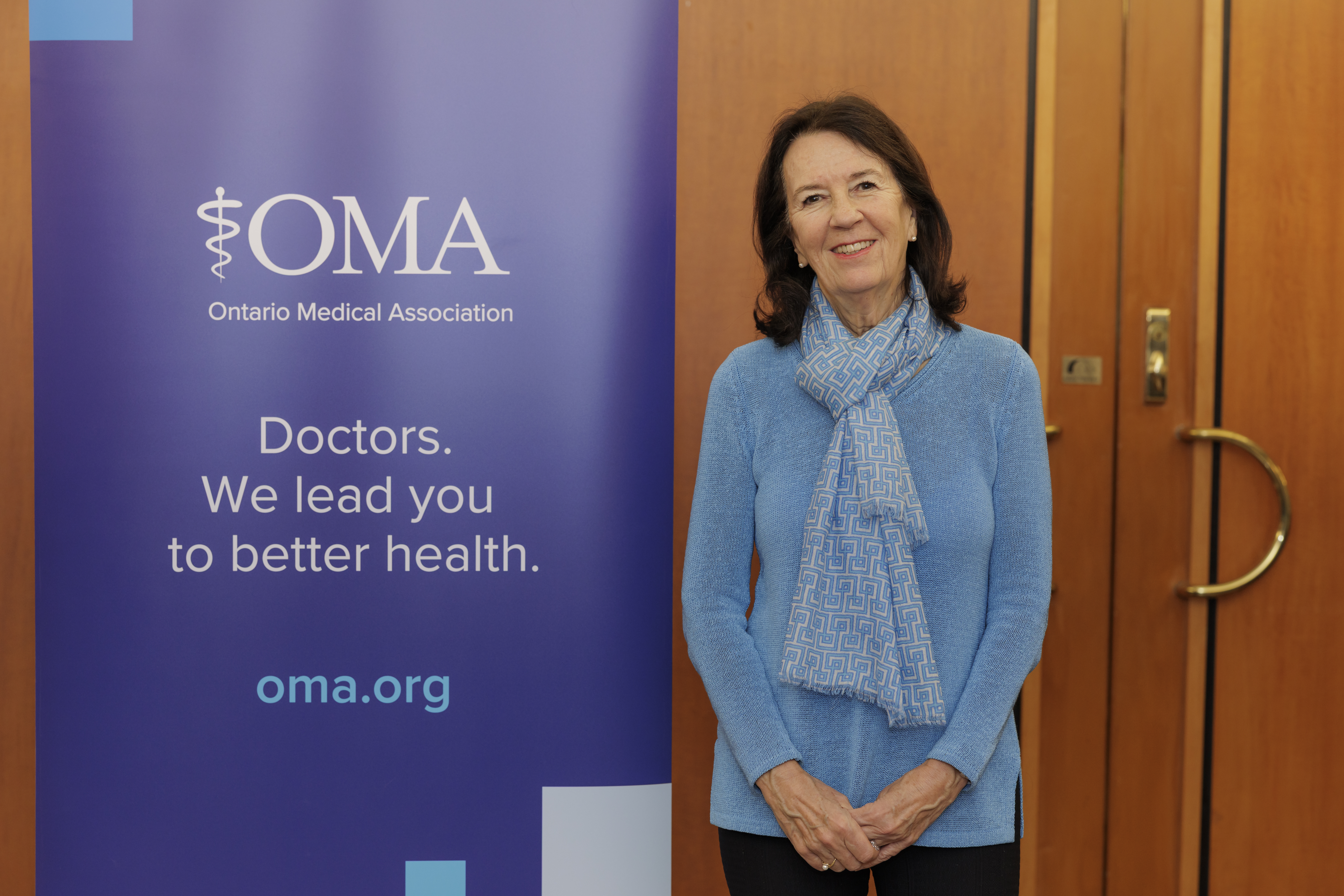
Physicians are accustomed to being the ones giving care and providing reassurance, so becoming the patient can be very challenging, says Dr. Jane Charters, a family physician in Oakville.
“There’s a nakedness and a vulnerability that comes with illness,” she says.
Dr. Charters is a co-facilitator of the Physician Health Program’s Colleagues in Care pilot peer group initiative for physicians living with cancer, which she says meets a huge unmet need in the medical community.
“Physicians could really benefit from something a bit more tailored to their life experience,” says Dr. Patricia Colton, pilot co-facilitator and co-creator.
“We need our physician colleagues to remind us to look after ourselves,” — Dr. Jane Charters, family physician
The idea sprouted from Dr. Colton’s “enormously stressful, frightening and disruptive” experience with colon cancer in 2020.

The Toronto psychiatrist and pilot co-facilitator had support and shared experiences with a physician friend being treated for cancer at the same time. This led her to identify a potential role for support from physician peers who could understand the unique experience of being both a physician and a patient.
Physicians tend to be very good at looking after others while being less adept at caring for themselves, says Dr. Charters, who has extensive experience with peer support work.
There are also practical concerns for clinicians, such as how to arrange support at work and for family while undergoing treatment.
In designing the initiative, the PHP conducted a literature review and environmental scan but found no comparable physician-specific cancer peer support groups.
They also surveyed physicians and discovered that, of those who identified as having a cancer diagnosis, 74 per cent expressed an interest in a physician peer support group.
The pilot began in May 2026, and involved six physician participants of varied ages, career stages and health statuses, which Dr. Charters says was helpful in providing different “checkpoints” of the cancer journey. They were recruited through various channels such as OMA News and the PHP web page and no interested physicians were turned away.
Initially planned as four virtual sessions, the pilot expanded to six in response to participant feedback.
Discussions were guided by a single question: What was the rose in your week and what was the thorn?
“The first session was for creating a safe space,” says Dr. Charters. “By the second session, people were starting to express more emotion and vulnerability.”
Drs. Charters and Colton say the group quickly developed a strong rapport, self-generating discussion topics such as the uncertainty of their diagnosis and the ensuing identity shift.
In considering future iterations of the initiative, the PHP was interested in hearing from participants about how connected, heard and understood they felt.
Participants reported a positive experience and expressed their appreciation for the opportunity to connect and share with fellow physicians.
“People are encouraging us to continue,” Dr. Colton says.
The PHP is considering how these groups can play a role in the overall peer support strategy to augment the individual peer support stream.
“We need our physician colleagues to remind us to look after ourselves,” says Dr. Charters. “It’s the oxygen mask analogy. We have to look after ourselves to be able to look after other people.”
If you have questions or may be interested in participating in a future Colleagues in Care peer support group, please contact PHP Peer Support Lead Beth Collison at peer.support@oma.org.